Description
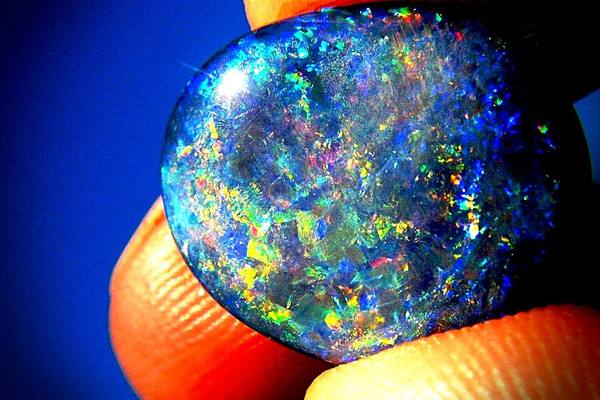
The universe has 13.8 billion years of history. Some of it fits in your hand. Lightning Ridge black opal is the most valuable gem variety on a per-carat basis that the Earth produces routinely. The ‘black’ refers to the dark body tone, which provides the backdrop against which play-of-color — caused by diffraction from stacked silica spheres of uniform size — blazes most intensely. Each opal’s pattern is unique, a frozen snapshot of spheres arranged by sedimentation 100 million years ago.
This specimen originates from Lightning Ridge, New South Wales, Australia, one of the world’s most significant localities for this type of material. Collectors and scientists have drawn from this region for generations, and for good reason: the combination of geological conditions here produces specimens of exceptional quality and clarity.
Every specimen is unique. Photographs approximate the visual experience, but the real thing — its weight, its luster under a raking light, the way it catches the corner of your eye — can only be experienced directly.