Description
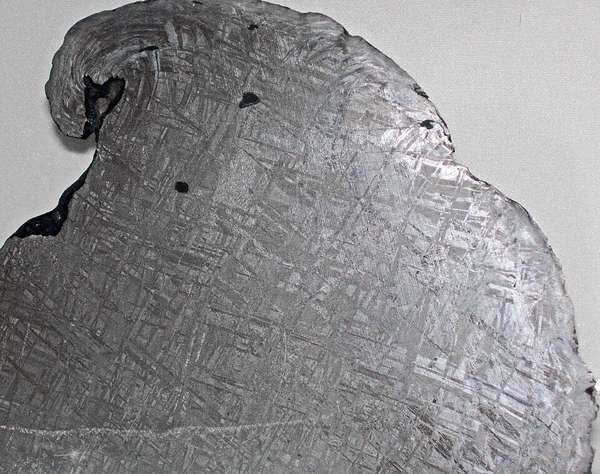
What looks like stone is, on closer inspection, frozen time. The Widmanstätten pattern — those angular geometric bands revealed by acid etching — took one million years per millimeter to form as the Gibeon parent body cooled in the vacuum of space at approximately one degree per million years. You cannot fake this. It is the slowest signature in the universe. These irons fell across 275×100 km of Namibia, an ancient strewn field from a collision long before Earth had life.
This specimen originates from Gibeon, Hardap Region, Namibia, one of the world’s most significant localities for this type of material. Collectors and scientists have drawn from this region for generations, and for good reason: the combination of geological conditions here produces specimens of exceptional quality and clarity.
Every specimen is unique. Photographs approximate the visual experience, but the real thing — its weight, its luster under a raking light, the way it catches the corner of your eye — can only be experienced directly.