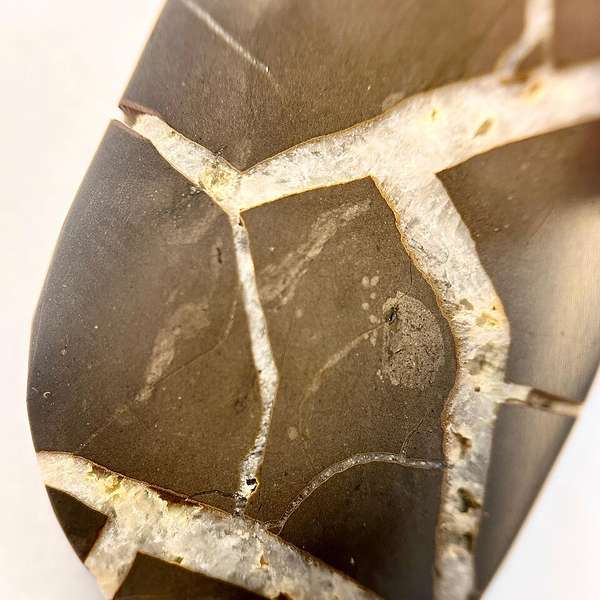
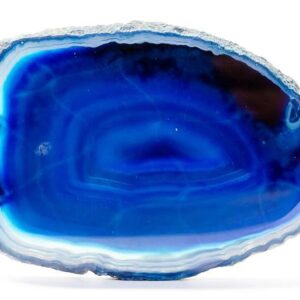
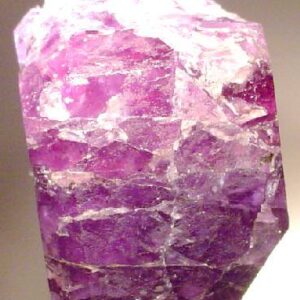
Septarian Nodule — Polished Half — Polished Face

$133.83
Chemical FormulaCalcite + aragonite + barite in clay matrix
Crystal System
Mohs Hardnessvaries
Specific Gravityvaries
LusterVitreous to waxy
TransparencyOpaque

Septarian nodules form in marine muds: organic-rich sediment hardens into an oval nodule, then shrinks as it dries, cracking into a cage-like pattern (‘septa’) that fills with calc…

15 in stock

SKU: TC-GEO-0805
Category:
Tags: , ,

Description

Collectors say that minerals are the universe’s autobiography, written in atoms. Septarian nodules form in marine muds: organic-rich sediment hardens into an oval nodule, then shrinks as it dries, cracking into a cage-like pattern (‘septa’) that fills with calcite, aragonite, or barite crystals. Polished in half, the resulting pattern looks like stained glass in earth tones — a natural mosaic that took millions of years to complete.

This specimen originates from Bingham, Utah, USA, one of the world’s most significant localities for this type of material. Collectors and scientists have drawn from this region for generations, and for good reason: the combination of geological conditions here produces specimens of exceptional quality and clarity.

Every specimen is unique. Photographs approximate the visual experience, but the real thing — its weight, its luster under a raking light, the way it catches the corner of your eye — can only be experienced directly.
Formation

This specimen formed through geological processes operating over timescales that dwarf human history. The specific combination of chemistry, temperature, pressure, and time at this locality produced material of exceptional quality that makes it a valued addition to any serious collection.

Locality

Septarian Nodule — Polished Half — Polished Face from Bingham, Utah, USA. This locality is known for producing specimens of exceptional quality.

Collector Notes

Photograph with a neutral grey background to capture true color.